
 English
 русский
 عربى
عربى Search
Is 300T Pongee the Right Fabric for Your Product?
2026-03-12
Content
- 1 Understanding 300T Pongee Fabric
- 2 300T Pongee Fabric for Umbrella Manufacturing
- 3 Waterproof 300T Pongee Taffeta Coating
- 4 300T Pongee Down Jacket Lining Fabric
- 5 Recycled 300T Pongee Eco Friendly Textile
- 6 300T Pongee Fabric Wholesale Price Per Meter
- 7 How to Evaluate Pongee Fabric Suppliers
- 8 Frequently Asked Questions
- 9 Conclusion
- 10 References
Selecting the right fabric requires understanding technical specifications. Many buyers confuse "pongee" with generic polyester. They overlook the importance of thread count and construction. This guide examines 300t pongee from a textile engineering perspective. It helps manufacturers make informed sourcing decisions.
We operate as China OEM/ODM Clothes Fabrics Manufacturers. We function as Custom Clothes Fabrics Exporters. Our family-owned plant has operated for over 20 years. We focus on Clothes Fabrics Factory production. We specialize in polyester nylon fabrics and linings. We serve outdoor functional clothing lines. We serve women's silk lines. We produce jacquard luggage fabrics. We manufacture outdoor goods. We operate 300 self-owned water jet looms. We maintain 100 matching twisters. We accept custom orders from foreign customers. We welcome factory visits in China.
Understanding 300T Pongee Fabric
What Does "300T" Mean in Pongee Specifications?
The "300T" designation specifies thread density. It indicates 300 threads per square inch. This high density creates a fine, smooth surface. It distinguishes pongee from lower-count polyester taffeta.
Thread count progression in pongee fabrics:
- 190T: Basic lining grade, 45-55 gsm, visible interstices
- 210T: Standard lining, 55-65 gsm, moderate density
- 240T: Fine quality, 65-75 gsm, smooth hand feel
- 300T: Premium microfiber, 75-90 gsm, silk-like drape
- 400T: Ultra-premium, 90-110 gsm, high-end apparel
300T represents the optimal balance. It provides density for performance. It maintains reasonable cost. It offers excellent printability and coating adhesion.
Microfiber Structure and Performance Characteristics
300T pongee uses micro-denier filaments. These measure 0.3-0.5 denier per filament. Standard polyester uses 1.0-1.5 denier filaments. The finer fibers create more surface area. This improves water resistance. It enhances soft hand feel.
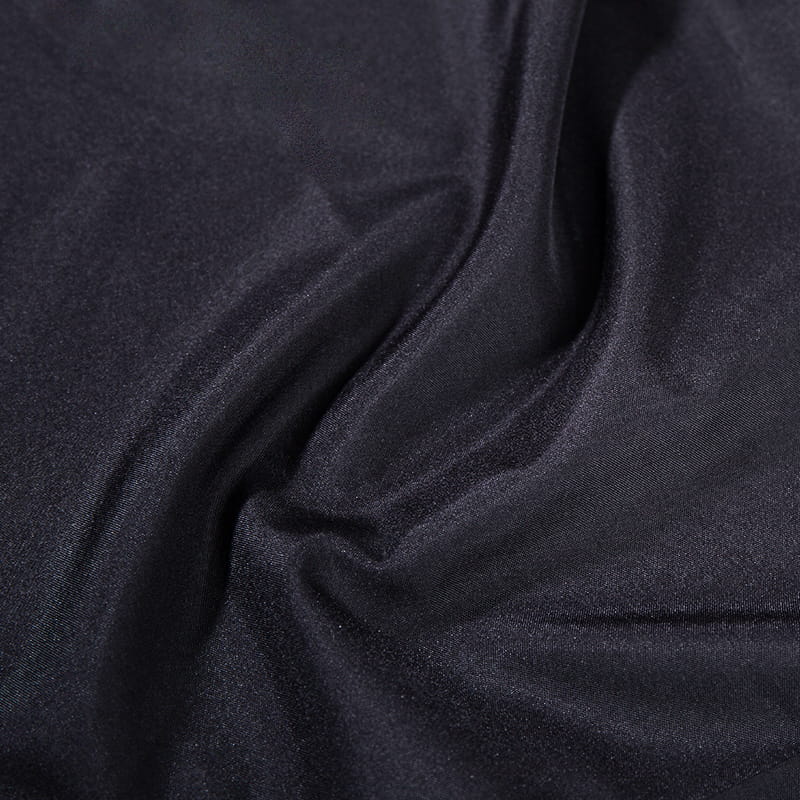
Key performance metrics for 300T pongee:
- Yarn count: 50D/72F or 75D/144F (filaments per yarn)
- Weight range: 75-90 grams per square meter
- Tensile strength: 400-500N warp, 350-450N weft
- Tear strength: 15-20N
- Air permeability: 5-15 cc/cm²/sec (uncoated)
300T Pongee Fabric for Umbrella Manufacturing
Waterproof Ratings and Canopy Durability
300t pongee fabric for umbrella manufacturing dominates the premium umbrella market. The tight weave provides inherent water resistance. Hydrostatic head measures 300-500mm without coating. With PU coating, ratings reach 3000-5000mm.
Umbrella-specific requirements include:
- Quick-dry surface preventing water retention
- UV resistance preventing color fading (UPF 30-50+)
- Flex resistance enduring 1000+ open/close cycles
- Light weight reducing user fatigue (under 100 gsm coated)
- Print clarity for brand logos and patterns
UV Resistance for Outdoor Protection
UV degradation threatens umbrella longevity. Unprotected polyester loses 50% strength after 500 hours UV exposure. UV-resistant yarns incorporate stabilizers. These extend service life 3-5x.
UV protection levels:
- Standard: 200-300 hours UV resistance
- UV-stabilized: 800-1000 hours resistance
- High-performance: 1500+ hours resistance
Water Jet Loom Manufacturing Precision
Our 300 water jet looms produce consistent 300T pongee. Water jet technology offers advantages for fine-count fabrics. The water stream carries weft yarn gently. It reduces filament damage. It maintains yarn integrity. This produces uniform fabric structure. Tension control stays within ±2%. This consistency matters for coating applications. It ensures even waterproofing.
Waterproof 300T Pongee Taffeta Coating
PU vs. Silicone Waterproofing Comparison
Waterproof 300t pongee taffeta coating requires careful specification. Coating type determines performance characteristics. PU and silicone offer different benefits.
Coating comparison:
| Property | PU Coating | Silicone Coating |
| Hydrostatic Head | 3000-10000mm | 2000-5000mm |
| Breathability (MVTR) | 3000-8000 g/m²/24h | 5000-12000 g/m²/24h |
| Abrasion Resistance | Excellent | Good |
| Flex Resistance | Good (5000 cycles) | Excellent (10000+ cycles) |
| Cost | Lower | Higher (20-30% premium) |
| Environmental Profile | Solvent-based concerns | Lower VOC options available |
| Best Application | Umbrellas, rainwear | Outdoor gear, tents |
Coating Weight and Breathability Balance
Coating weight directly affects performance. Heavier coatings increase waterproofing. They reduce breathability. They add stiffness.
Standard coating weights:
- Light coating: 15-25 gsm, 3000mm HH, high breathability
- Medium coating: 25-40 gsm, 5000mm HH, balanced performance
- Heavy coating: 40-60 gsm, 10000mm HH, lower breathability
300T pongee accepts coatings evenly. The smooth surface prevents pinholes. The tight weave supports thin, effective coatings.
Quality Control in Coating Applications
Our coating lines include inline inspection. We measure coating weight every 500 meters. We test hydrostatic head every 1000 meters. We monitor adhesion via tape testing. We check appearance for streaks or bubbles. This ensures batch consistency. It prevents customer rejections.
300T Pongee Down Jacket Lining Fabric
Down-Proof Construction Requirements
300t pongee down jacket lining fabric must prevent down leakage. Down clusters measure 2-5cm. They escape through gaps exceeding 0.5mm. 300T construction provides 0.1-0.2mm maximum pore size.
Down-proof testing uses standard methods:
- EN 12132-1: Rub test with down-filled pillow
- ASTM D737: Air permeability correlation
- Passing grade: zero down passage after 1000 rubs
Calendering enhances down-proofing. Heat and pressure flatten fabric surface. This closes microscopic gaps. It improves barrier function 30-50%.
Static Control in Nylon Microfiber
Static electricity causes down clumping. It creates discomfort. It attracts dust. 300T pongee requires anti-static treatment.
Static control methods include:
- Carbon fiber filament integration (0.5-1% of yarn)
- Anti-static surfactant finishing (durable for 20+ washes)
- Humidity-absorbing polymer coatings
- Grounding threads in grid patterns
Surface resistivity targets 10⁶-10⁹ ohms. This prevents static buildup. It maintains down loft.
Custom Color Matching Services
Down jacket linings require precise color coordination. Shell fabrics vary seasonally. We provide lab dip services. We match Pantone references. We produce within ΔE 1.0 tolerance. We maintain color consistency across 10,000+ meter orders. Our 100 twisters enable yarn dyeing. This provides superior color uniformity versus piece dyeing.
Recycled 300T Pongee Eco Friendly Textile
GRS Certification and Recycled Content Verification
Recycled 300t pongee eco friendly textile meets growing sustainability demand. Global Recycled Standard (GRS) certification verifies content. It tracks chain of custody.
GRS requirements include:
- Minimum 20% recycled content (50% for GRS logo use)
- Traceability documentation from source to finished product
- Chemical restrictions (no hazardous substances)
- Social compliance in production facilities
- Environmental management systems
Recycled 300T pongee typically uses post-consumer PET bottles. These convert to polyester chips. The chips extrude into micro-denier filaments. Quality matches virgin fiber.
Performance Parity with Virgin Fiber
Early recycled fibers showed strength loss. Modern recycling technology eliminates this gap.
Performance comparison:
| Property | Virgin 300T Pongee | Recycled 300T Pongee |
| Tensile Strength Warp | 450N | 430N (95% of virgin) |
| Tensile Strength Weft | 400N | 380N (95% of virgin) |
| Tear Strength | 18N | 17N |
| Color Fastness | Grade 4-5 | Grade 4-5 |
| Coating Adhesion | Excellent | Excellent |
| Price Premium | Baseline | 10-15% higher |
Sustainable Manufacturing with Water Jet Technology
Our water jet looms support sustainability. Water jet weaving uses no air compression. It consumes 30% less energy than air jet. Water is recycled internally. Our facility treats 100% of process water. Recycled 300T pongee production maintains these efficiencies. It adds the environmental benefit of waste PET diversion.
300T Pongee Fabric Wholesale Price Per Meter
Price Drivers in Microfiber Manufacturing
300t pongee fabric wholesale price per meter varies significantly. Understanding cost components enables effective negotiation.
Primary price factors include:
- Yarn specification: Micro-denier costs 15-25% more than standard
- Raw material: Virgin vs. recycled (recycled carries 10-15% premium)
- Weaving density: 300T requires slower loom speeds (10-15% cost increase)
- Finishing: Calendering, coating, or anti-static treatments add 20-50%
- Color: Dark shades cost 5-10% more due to dye consumption
- Volume: 3000m+ orders achieve 15-25% discount versus 500m minimums
Current market ranges (FOB China):
- Grey fabric (unfinished): $1.80-2.50/meter
- Finished plain: $2.50-3.50/meter
- PU coated: $3.20-4.50/meter
- Silicone coated: $3.80-5.20/meter
- Recycled GRS certified: +15-20% premium
Volume Discount Structures for B2B Orders
Wholesale pricing tiers reflect manufacturing economics. Setup costs amortize over longer runs. Material waste percentages drop. Labor efficiency improves.
Typical volume breakpoints:
- 500-1000 meters: Base price, standard lead time 25-30 days
- 1000-3000 meters: 8-12% discount, priority scheduling
- 3000-5000 meters: 15-18% discount, dedicated loom allocation
- 5000+ meters: 20-25% discount, custom color development included
OEM/ODM Cost Optimization Strategies
Our OEM/ODM services reduce total landed cost. We optimize specifications for application needs. We avoid over-engineering. We suggest standard colors where brand identity permits. We coordinate coating schedules to maximize line efficiency. We consolidate shipments to reduce freight per meter. Our 20+ years experience identifies cost-saving opportunities. We maintain quality integrity.
How to Evaluate Pongee Fabric Suppliers
Technical Capability Assessment
Supplier evaluation requires technical verification. Request documentation of:
- Loom specifications (water jet vs. air jet, width, speed capability)
- Quality control procedures (inspection frequency, AQL levels)
- Testing equipment (hydrostatic head tester, tensile tester, color matching)
- Certification scope (ISO 9001, GRS, OEKO-TEX)
- Development capability (sample lead time, minimums for custom)
- Production capacity (monthly meters, current utilization)
Factory visits reveal actual capabilities. Review production flow. Inspect raw material storage. Observe quality checkpoints. These verify that claimed capacity and quality systems operate effectively.
Family-Owned Manufacturing Advantages
Our family-owned structure offers distinct benefits. Decision-making is rapid. Owner involvement ensures quality commitment. Long-term perspective prioritizes relationship stability over short-term margin.
Specific advantages include:
- Direct owner access for technical discussions and problem resolution
- Flexible payment terms for established partners
- Consistent management team (low turnover versus corporate mills)
- Investment in equipment maintenance (300 looms, 100 twisters fully operational)
- Personal accountability for quality issues
Frequently Asked Questions
What is the minimum order quantity for 300T pongee?
Standard MOQ is 1000 meters per color for stocked greige. Custom colors require 2000-3000 meters. Coated fabrics have 1500 meter minimums. We accommodate smaller test orders (500 meters) for new customers at slight premium pricing. Volume discounts apply at 3000, 5000, and 10000 meter breakpoints.
How does 300T pongee compare to 210T for umbrella use?
300T provides superior waterproofing (30-50% better hydrostatic head). It offers better print definition for detailed patterns. It has softer hand feel. It costs 25-35% more than 210T. For premium umbrellas, the upgrade is justified. For commodity umbrellas, 210T suffices. We provide samples of both for side-by-side evaluation.
Can you produce 300T pongee with fire retardant properties?
Yes. We apply phosphorus-based fire retardant finishes. These achieve BS 5852 or NFPA 701 standards as required. Fire retardant treatment adds 15-20% to fabric cost. It requires specific coating line setup. MOQ is 3000 meters. The treatment maintains hand feel and color. It does not significantly affect waterproofing if top-coated.
What is the lead time for custom color development?
Lab dip submission requires 5-7 days. Approval and bulk production requires 20-25 days. Recycled fiber orders add 5 days for material sourcing. Coated fabrics add 7-10 days. Total lead time from order to shipment: 30-40 days for standard items, 45-55 days for complex custom development. We maintain greige stock for urgent orders. Dyeing and finishing then requires 15-20 days.
Do you provide testing reports with shipments?
Yes. Standard shipments include mill test reports showing tensile strength, tear strength, and weight. Upon request, we provide third-party testing for hydrostatic head, color fastness (ISO 105), and down-proofing (EN 12132). GRS-certified recycled fabrics include transaction certificates. We maintain testing records for 5 years. We support customer audit of our laboratory.
Conclusion
300t pongee represents a versatile microfiber fabric suitable for diverse applications. 300t pongee fabric for umbrella manufacturing offers optimal waterproofing and printability. Waterproof 300t pongee taffeta coating requires careful specification of PU or silicone systems. 300t pongee down jacket lining fabric provides down-proof performance with proper construction. Recycled 300t pongee eco friendly textile meets sustainability requirements without sacrificing performance. 300t pongee fabric wholesale price per meter reflects quality inputs and volume efficiencies. Our family-owned manufacturing operation, with 300 water jet looms and comprehensive OEM/ODM capabilities, provides reliable sourcing for quality-conscious buyers.
References
- International Organization for Standardization, ISO 811: Textile Fabrics - Determination of Resistance to Water Penetration - Hydrostatic Pressure Test, Geneva, 2018.
- European Committee for Standardization, EN 12132-1: Feather and Down - Test Methods - Part 1: Down-Proof Properties of Fabrics, Brussels, 2019.
- Textile Exchange, Global Recycled Standard (GRS) Version 4.0, 2019.
- American Association of Textile Chemists and Colorists, AATCC Test Method 127: Water Resistance - Hydrostatic Pressure Test, Research Triangle Park, NC, 2020.
- International Organization for Standardization, ISO 105: Textiles - Tests for Colour Fastness, Geneva, 2022.
- China National Textile and Apparel Council, FZ/T 01004-2008: Coating Fabrics - Test Methods for Coating Adhesion, Beijing, 2008.
- ASTM International, ASTM D737-18: Standard Test Method for Air Permeability of Textile Fabrics, West Conshohocken, PA, 2018.
Copyright © Jiaxing City Zhouye Textile Co., Ltd. All Rights Reserved.
Custom Jacquard Luggage Fabrics Suppliers
